

Angels and Demons
 The opening scene at the CERN physics laboratory where an experiment to create anti-matter (The God particle) takes place is visually stunning. Rome and its Catholic rituals provide a beautiful backdrop for the film. The next two hours, however, are a wild car chase through Rome that I found pretty annoying after a while. The last 25 minutes bring an unexpected turn of events that left me moderately satisfied with the film.
Continue Reading
Pirates of the Caribbean: The Curse of the Black Pearl
 This fairy tale reminded me of children’s theatre, a visit at the circus, and a Hollywood love story and action film all mixed into one. It is fun to watch Jonny Depp play a pirate who has been deposed by his crew and now wants to regain his position as the captain of a famed pirate sailing ship. Some of the dialogues are excellent. The writers know how to put together entertainment for all ages.
Continue Reading
The Reader
 The slim book on which the film is based is a wonderful read. Knowing the book makes the film much less exciting. The first hour feels very slow, particularly because book felt brisk. In the second hour the drama receives a jumpstart and you forget that you are sitting on perhaps a not so comfortable seat in the movie house. I read the book in one evening and savored the experience. After two hours watching The Reader I felt drained. A story nourished by the background of German society’s difficulty to come to terms with what Germans did between 1933 to 1945 was turned in the film into a story about how individual lives are messed up by experiences during childhood and youth. That story we have heard a million of times. Commercially the film benefitted from being made by Hollywood.
Slumdog Millionaire
 Last time I looked, India had the second largest film industry in the world. Yet very seldom a Bollywood movie reaches the eyes of a western audience. The genius behind Slumdog Millionaire is to make Western filmmakers translate a Indian based-story into a western film format. In the process, a magnificent film has arrived on American shores that will be a strong contender for the Oscars. The film is a fairy tale for adults with great dramatic and romantic force. Its wonderful story gives you a glimpse of India—with all its contradictions—that most Americans and Europeans would have never seen. The film covers a 25-year period in the life of Jamal and his slightly older brother Salim who grow up in the slums and later are pulled apart because of differences in personalities and circumstances. Emotionally the first part of the film reminded me of Cinema Paradiso, the second part of teenage delinquency epics, and the final part of modern game show and reality-show culture. On top of it, a Romeo & Julia story holds the film together and makes it appealing for a mass audience. I did not know anything about the film before seeing it. I selected it over the new Clint Eastwood film Gran Torina simply because I wanted to see pictures of India. What a lucky choice: Slumdog Millionaire effortlessly made it onto my list of favorite films of all time.
Tarnation
 In my junior or senior year I formulated this motto: I want to turn my life into a work of art. What I had in mind was something like this: Rather than turning out work that could be construed as art I wanted to make sure that my life as a whole was esthetically compelling. Given the gifts and option available to me, I wanted to mold my life into something could compete with what is widely considered a compelling work of art. Jonathan Caouette, in his stunning autobiographical documentary Tarnation, turns his life into a work of spectacular art. But watching the film I realized that when I hatched my plan I conceived it as way to live forward. Caouette looks backward at age 30 and tries to make sense of his strange family life by construction an autobiography using only photos, super 8, answering machine messages, and video snippets that he collected since he was eleven years old.
Continue Reading
Frost-Nixon: The TV Interview
 Even if you have already seen the 1976 film All the President’s Men with Dustin Hofmann and Robert Redford playing the two Washington Post journalists (Woodward and Berstein) who exposed the Watergate scandal or the 1994 BBC documentary Watergate: Third Rate Burglary, this 1977 interview of a British journalist with Richard Nixon about Watergate is a fascinating 75-minute documentary. Initially, Nixon’s arguments that he did not commit a criminal act reminded me of Bill Clinton’s parsing of language when he was asked in a courtroom whether he had sex with Monica Lewinsky. But later in the interview Frost pushes Nixon into the corner where Nixon let’s down his guard and makes some amazing declarations.
Doubt
 A psychologically pleasing story offers you some resolution at the end. John Patrick Shanley, the writer and director of Doubt, denies you this pleasure. He errs on the side of wanting to teach you too much. He wants you to be in doubt at the end of the film and this means never revealing what really happened. The film takes place in a catholic school in the Bronx in the 1960s. The head nun (Meryl Streep) suspects that the school’s priest (Philip Seymour Hoffman) is abusing his position of power. She harbors no doubt and uses all her political skill to get the priest to resign. In the end, after the priest is gone, she admits to her confidant that she is in doubt but we never find out if the priest did anything wrong. If you are someone who already knows that we never can be absolutely sure, the movie will not give you much.
Continue Reading
The Edge of Heaven
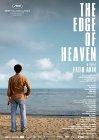 The German title of the film (Auf der anderen Seite) means something like “on the other side”. Fatih Akin, the German writer and director of Turkish background has wonderful material to work with (growing up with Turkish parents in Germany) but lacks the skill to shape the material into a first-class film. He comes across like a recent film school graduate who received money to turn his school project into a full feature film: the writing is unfocused and, worse, he shoots the film in such a way that you always remember that everything is an act rather than real. By not allowing the fundamental magic of movies to unfold where you lose yourself into the plot as if you were watching a real thing, Aktin is making it unnecessarily hard for the viewer. I recommend that you watch instead http://peter.murmann.name/movies_comments.php?id=256_0_2_0_C ]The Lives of Others[/url]which shows you what a good filmmaker can do with powerful material.
Twilight
 Most people I know woke up to the full powers of the flesh sometimes in their second decade. Some experience this discovery as ‘no big deal;’ others are thrown off balance. Trying to explore this new territory with some success often proves dauntingly difficult. Many films have been made about teenage romance. A few of them are delightful to the adult mind. Twilight is one of them. It takes you to a different place: A truly dangerous love affair that every parent, for once, would have a right to oppose: Do you want your teenage daughter fall in love with a classmate who happens to be Vampire? Visually, the film takes you to stunning views and mood of the Pacific Northwest. You don’t want to miss these vistas.
Good Night, and Good Luck
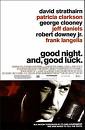 At the Oscars award show not long after Good Night, and Good Luck came out in 2005, the host made a joke about the long-term bachelor George Clooney who directed and starred in the film. It went something like this:

© 2026 Peter Murmann. Powered by ExpressionEngine.
