

I Now Pronounce You Chuck & Larry
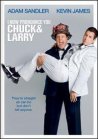 I Now Pronounce You Chuck & Larry reminded me of an episode of the Love Boat in the 1980s. After yet another romantic disappointment, a lady decides that she had it with men. She meets a notorious womanizer on the boat. To get the woman “into the sack”, the gigolo plays the role of a man who claims that he also never wants to start a new relationship. To make their commitment to abstinence even stronger, the womanizer proposes after a few encounters that they should sleep in the same bed andprove to themselves that they are capable of foregoing sex. The lady agrees, but her hand reaches over to his side of the bed before longThe next morning the love boat has a new romantic pair. Back to Chuck & Larry. Chucks wife has died and he no longer is entitled to spousal benefits from the City of New York, which would help his children in case he would also die. Chuck asks his womanizing best fried to pretend that he is his domestic partner.
I am not there
 About three years ago I acquired a collection of the best Bob Dylan records. I was surprised how many songs I knew, reminding me just how influential Dylan’s music had been during the past four decades. I am not there is an artistic experiment that manages to be a total failure. Todd Haynes wants to tell the story of Bob Dylan by showing him through entirely different characters, ranging from a young black vagabond kid to middle-aged cowboy. At the end of the film I yearned to simply listening to Dylan’s songs rather than seeing the collage of biographies of different people that are supposed to stand for the life of Dylan. Dylan’s songs tell you more about him than this “art-film”. The one saving grace is Cate Blanchet, who plays one of the characters representing Bob Dylan. She does a much better job than all of the other stars (Christian Bale, Richard Gere, Heath Ledger) who had signed to represent through a role Bob Dylan.
Live Free or Die Hard
 Die Hard is not the kind of title that lures me into the theatre. But one day in a hotel room somewhere around the globe I came across a TV channel that showed one of the earlier Die Hard movies. I don’t remember which one it was. It played in New York City. The film was entertaining. I heard that Die Hard 4 had a new twist. Yesterday I needed some distraction from work and decide to watch Bruce Willis back in action as John McClane. Willis’s stunts defy the laws of physics, but the drama is pretty clever. A group of terrorists is shutting the entire country down by taking control of all U.S. major computer networks that underpin the digital economy. Apparently, in the past few weeks we came close to a complete meltdown of the global financial system. Against this backdrop, the film felt timely and scary. Bruce Willis saves the day. In real life, one small town cop will not save the country from a systematic failure of the federal government.
Bee Movie
 Shrek 1 and 2 bored me sufficiently that I never watched the entire movie. Could the makers of the Shrek sequel come up with an animation film that could compete with Pixar creations? Yes, but only after teaming up with the comedian Jerry Seinfeld. Having watched a very funny trailer for the film a few months ago, I wanted to see the Bee Movie. Just like the Pixar movies, this film puts a smile on your face. Ohhh, life is good when someone as funny as skillful as Jerry Seinfeld gives a young bee the ability to talk to humans and file a class action in the New York State superior court. Enjoy!
La Vie en Rose
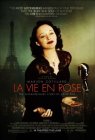 La Vie en Rose is the mirror image of August Rush. Telling the story Edid Piaf’s exotic life, the film easily feels real and authentic. For an ear that grew up on pop and classical music, it is difficult to connect to the French style of singing in the 1920s and 1930s. I could not hear what made Edid Piaf’s singing so extraordinary. By contrast, the first time August Rush touches a guitar to make music, it is apparent that this kid is a genius. You can see and hear it. I found La Vie en Rose to be in a similar league as Ray and Walk the Line. In regard to the superb acting, the most compelling scene takes place on the first date that Edith Piaf (Marion Cotillard) has with the boxer Marcel Cerdan (Jean-Pierre Martins). Cotillard task is to show in her face that Piaf, who grew up in a whorehouse and has had a long list of lovers, is smitten with Marcel in a way she had never felt before (a “coup de foudre” as the French would say). Cotillard deserved the Oscar this year for this scene alone.
August Rush
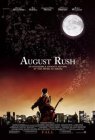 Enjoying music seems to be hardwired into our brains. The wild success of the iPod is strong testimony that everyone loves music. I have yet to meet someone who does not like to listen to melodic sounds. August Rush is a 10-year old boy stuck in an orphanage somewhere just outside of New York City. He deciphers music in the many regular sounds of everyday life. He also believes that he can hear musical messages from his parents. His fellow orphans think that August is just a freak. One day August decides to hitchhike to Manhattan to look for his parents. Within 24 hours August morphs into a child prodigy who would have given young Mozart a run for his money. For once I can give away how the story ends: happily. Repeatedly deus ex musica comes to aid the plot. All the stars align perfectly at every single juncture to bring the story to the one conclusion that was possible in a universe ruled by a micro-managing, all-powerful, music-loving God: August is reunited with his parents on the lawn of Central Park. While story in the film is ridiculous, the film’s music, mixing rock, folk and classical sounds, is wonderful.
Charlie Wilson’s War
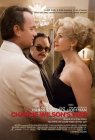 Hollywood gives you an entertaining history lesson on how the Soviets were defeated in Afghanistan. Charlie Wilson (Tom Hanks) is a likable congressman who is more interested in alcohol and good-looking women than passing any law. While he lacks diligence and determination on the congressional floor, he recruits what he regards a dream-team staff: all staffers are female and one is looking better than the next. Wilson has no legislative record whatsoever until he becomes aware of the plight of the Afghani people who are fighting the Soviet Army at enormous costs to their own population. After sleeping with a rich Texas Redneck (Julia Roberts), Charlie becomes serious and maneuvers Congress into providing the Afghani people with all the money they need to win the war. The most enjoyable character in the film is Philip Seymour Hofmann who plays iconoclastic CIA officer in charge of helping the Afghani effort against the evil empire.
Juno
 It is difficult for me to write these lines about such a charming film. The plot has a number of unfortunate flaws. Juno, the character and the actress playing the role, are magnificent. But the story feels constructed by a writer rather than based on real lived experience. Juno is barely sixteen and seduces a nerdy classmate into having sex. She is not using any contraceptives and falls pregnant. The entire film is devoted to her struggle with figuring how to deal with her situation. What she does do in the end does not make sense to me. Her stepmother and her father were an option that she did not consider at all. It is great fun to watch Juno and her family compete with one another hurling out comic lines. You don’t hear regular family dinner conversations the way they occur at Juno’s house.
Elizabeth: The Golden Age
 The first 45 minutes of this sequel about the life of Queen Elizabeth are the most gratifying film opening I have experienced in months. It is not the plot that glues your eyes to the screen but the way the director shoots the scenes and moves quickly from one location to another. The camera is always in motion, filming from unexpected perspectives. You feel like being introduced to a whole new way of film-making. Unfortunately the director is not able to sustain this wonderful approach and the film settles into more familiar grooves. Since we know how the story will end (Elizabeth will not have children and she will triumph to make it her Golden Age), the second half of the film is merely good. Clive Owen as Mr. Releigh shows that he can also play a charming happy fellow. The historical setting is beautifully rendered, except for two computer generated scenes of a large forest and a battle on sea which seem—well—computer-generated rather than real.
Continue Reading
License to Wed
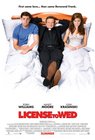 One of the big ironies of modern society is that we require people to obtain licenses for important and trivial tasks before we let them lose onto the world. I remember being told in my late teens. The of two most important decisions in life about choosing the right job and the right wife. For almost every job we need to demonstrate qualification before we can get hired. But when it comes to marriage anyone having reached the appropriate age can self-declare to be ready for the task of committing for a life-time. License to Wed thinks this to be ridiculous. The reverend Frank (Robin Williams) believes that a couple should first go through a rigorous program of examinations before they can be declared fit to marry. Sadie Jones (Mandy Moore) enlists reverend Frank to help her figure out whether Ben Jones (John Krasinski) is the right one. I thought that the film’s premise was clever but the execution left much to be desired.

© 2026 Peter Murmann. Powered by ExpressionEngine.
