

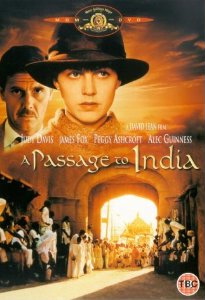
 Do novelists and poets change the world or do simply please and entertain us? I suspect that the best novelists sense the early signs of a new mood and outlook. If truly gifted, they are able to put in words and stories such a new outlook, infect the rest of us with it, and thereby pave the way for sometimes dramatic social changes. In his novel A Passage to India, E. M. Forster exposes the hypocrisy the British engaged in while in ruling India. While thinking of themselves as the most civilized people on earth, they treated Indians as subhuman. British rule was already questioned in 1924 when Forster’s novel was published. Yet it took another 23 years until Indian independence. Watching the film version of the novel, it seems to me that British readers of Forster’s novel would have been infected with the sense that British rule is unjust. The first 60 minutes of the film are slow and I was about stop watching. But then the drama picks up and the next 90 minutes are wonderful.
Forster explores with deep sensibility the human desire to connect to others but the challenge of doing this in world that is not obey our wishes. The film offers breathtaking pictures of India making me exclaim: “This reminds me of The Sound of Music although the human relationships portrayed are deeper and more complex.” The biography of Forster explains why the relationships between men are described so much better than the relationship between men and women. I cannot wait to travel to India myself.


Your Comments
0 Responses. Comments closed for this entry.