

Crash
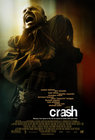 Not since American Beauty has a Hollywood picture been so surprising. The film is set in LA and evokes a similar mood as Lost in Translation. The first half made me restless: “Dave Chapelle does a much better job composing racist dialogues for his show on Comedy Central. Is this all the film has to offer?” But we are merely set up to be fully unprepared for what descends upon us in the second half. What makes Crash in the end an amazing movie experience is that it creates a car accident in which you first think you know who is the guilty person. It turns out to be much more ambiguous and this ambiguity becomes the dramatic center of a poetic piece of cinema.
Angels in America
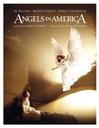 The word that arrived at my doorsteps about the HBO miniseries Angels in America was: fantastic. I knew Al Pacino and Meryl Streep were among the cast, but I had no idea what the miniseries was about. This gave me a most pleasant of surprises watching the first of the six episodes. The teleplay was so powerful that I suspected the film had to be based on a play. I was correct. For very good reasons Tony Kushner won a Pulitzer Prize for the play Angels in America. The second and third episode were disappointments given the high bar the first episode had set. Episode 4 and 5 were again much better but final one again suffered from a lack of discipline and a good editing job.
The Manchurian Candidate
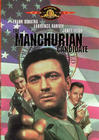 I toyed with the idea of watching the remake of this 1962 film that came out last year with Denzel Washington in the lead. Having had bad experiences with remakes, I decided to see the original film instead. Frank Sinatra not only owned the rights to the film but also played a main role. The plot line is simple: The Russians capture an American soldier in Korea, brain wash him, and send him back to America to carry out missions that would help the Soviet cause. Altough we can still detect the tensions of the cold war lurking in the background, the narrative is initiallly much too slow for the contemporary viewer. In the middle the film—almost surprisingly—gets back on track. Freud was clearly at the peak of his influence when the script was put together: at the center of the personal and political drama is the relationship between mother and son who hate each other. The Manchurian Candidate is not a film you have to see.
Ray
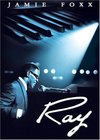 If Ray Charles had been a Hollywood rather than a music star, Ray would have cleaned up at this year’s Oscars. Instead, Clint Eastwood’s Million Dollar Baby and Martin Sorcese’s Aviator about Hollywood director and aviation pioneer Howard Hughes won five and four Oscars respectively. Ray is a labor of love and a much better film than both Million Dollar Baby and Aviator. Every scene is crafted with thoughtfulness and attention to details. Ray is wonderful in every regard and will be the yardstick for any future biographical drama. The only saving grace for the Academy of Motion pictures is that it gave Jamie Fox an Oscar for Best Actor. Fox’s performance is stunning and an extravagant pleasure to watch. Go see and hear Ray. You will experience an extraordinary motion picture event.
Love’s a Bitch
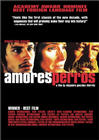 Love’s a Bitch (Amores Perros) received an Oscar Nomination for Best Foreign Film, rave reviews, and prizes at numerous festivals. The film did not resonate with me. I think as an observation about the human condition the film is wrong: yes, love can be a bitch, but it is not always a bitch as the director (Alejandro Gonzales Inarritu) implies. I also found the effort juvenile and lacking in perception. The stories we are told are old stories: a young man is in love with the wife of his brother, a woman loses her body that is so central to her identity, an old man gives up his family for the sake of fighting for the larger social good and finds himself disappointed. If you tell old stories, put them at least in a new light. Otherwise we are better off hearing the originals.
Hotel Rwanda
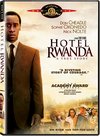 The film highlights powerfully that in the European and American mind a black African life is worth less than a white life. A catastrophy that kills 500 Europeans is emotionally judged to be worse than the killing of 500,000 Africans. The latter event hardly makes the news. Don Cheadle stars in the true-life story of Paul Rusesabagina, a hotel manager who housed over a thousand Tutsis refugees during their struggle against the Hutu militia in Rwanda. The acting is spotty. Cheadle is superb, but Nick Nolte, for example, delivers a ghastly performance as an UN colonel. Roman Polanksi directed The Pianist with a sure hand, showing the right amount of cruelty and brutality to neither trivialize the suffering portrayed in the movie nor to numb the viewer. The ending of Hotel Rwanda trivializes everything you witnessed earlier.
Melinda and Melinda
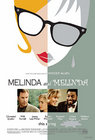 Is it more accurate to see life as a comedy or a tragedy? This is philosophical question gives Woody Allen the hook to explore the complications that arise when an old friend shows up at her friend’s dinner party with more than a little bit of baggage. I was intrigued enough to take another look at Woody Allen who has become too repetitive for me in recent years. The film gives you a few good laughs, particularly when Will Farrell’s muses over whether it would be OK for a liberal Democrat to have sex with a Republican. But on the whole it doesn’t break any new ground. Allen’s problem is that he makes too many movies (one a year), leaving him no time to make a really good one. The storyline gives Radha Mitchell (who also played in Finding Neverland and Man on Fire the opportunity to show just how good an actress she is. Somewhat irritatingly you feel that Woody Allen is stuck in Will Farrell’s body because you hear Woody talking.
Closer
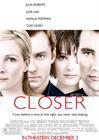 Closer is depressing in every respect. Nobody gets closer to love, to beauty, to understanding. Not the writer of the script (Patrick Marber), not the director (Mike Nichols), not the viewer (you and me). Watching the film, I felt real anxiety about getting old. Almost 40 years ago Mike Nichols directed Who is Afraid of Virginia Wolf, a wonderful movie based on a play in the same name. Both movies focus on psychological warfare that can break out in relationships. But Closer has lost all sense of psychological believability, drowned out by what I now fear to be the tragic desires of old age. As a young man, Nichols had clear before his eyes that a highnoon shootout in a relationship is all the clashing of personalities, life plans, accomplishments and backgrounds. Skip Closer and get closer in Who is Afraid of Virginia Wolf.
The Motorcycle Diaries
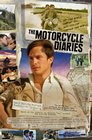 On an abstract level all novels are either stories about travel or character development. The first half of The Motor Cycle Diaries falls solidly in the travel category. Not being burdened by responsibilities for others, two young people decide to take a motorcycle tour through the different countries of South America. The camera captures arresting pictures of the landscape that made me want to pack up my bags and see the continent with my own eyes. Somewhat unexpectedly the second half of the movie tries to become a film about character development. At the end we are told that one of the two became a famous political figure. The character development mission of the film failed utterly to prepare me for what one of the two men ended up doing in life.
Finding Neverland
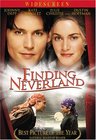 This enchanting film dramatizes how the playwright James Matthew Barrie (1860-1937) created with his best known work, Peter Pan. In 1903 Barrie’s latest play is a total failure with audiences and critics alike. To distract himself from his creative problems, Barrie (John Depp) starts playing daily with the four fatherless boys and their widow mother (Kate Winslet) who he met in the park. One of the boys, Peter, is particularly distraught over his father’s death. Barrie encourages him to take up writing to let his imagination find beauty and happiness. The interactions with these four boys give wings to Barrie’s imagination and allow him to write Peter Pan. The script based on a marvelous play; the acting is superb. Particularly moving is the performance of Freddie Highmore who plays Peter. The film inspired me to put Peter Pan on my reading list.

© 2026 Peter Murmann. Powered by ExpressionEngine.
