

In her Shoes
 Two sisters, Maggie (Cameron Diaz) and Rose (Toni Collette), could not be more different. Maggie gets any man she wants but is not able to hold a steady job and support herself financially. Rose has no success with men and is climbing up the corporate ladder in a high prestige law firm. When Rose finally manages to get a man to spend a night with her, her state of romantic bliss comes quickly to an end. Having been kicked out her father’s house, Maggie is staying at Rose’s apartment while trying to find a job. When Rose boyfriend rings the doorbell one afternoon, Maggie jumps into bed with him only to be caught in flagrant by her sister. Rose is so hurt that she kicks Maggie out and the sisters lose all contact and go their own novel ways. But despite all their differences, the two ladies are bound together deeply by their experience of having lost their mentally ill mother at a very young age. The film traces the psychological difficulty of being cut off from someone who is tightly connected to one’s identity. The movie is watchable on an airplane (I saw it on my recent trip to Los Angeles) but is not particularly profound. There are a few good jokes, primarily delivered by Jewish ladies in a Florida retirement community.
Syriana
 It is customary at many opera productions to hand out notes to the audience about what is happening in the different acts of the musical work, often because the opera is sung in a foreign language. Most critics and moviegoers have remarked the plot of Syriana is jumping to so many places and to so many individuals that one needs the equivalent of opera notes to stay abreast of what is happening. Alas, if this were the only problem of the film, my weekly evening at the movies would have been splendid. When I form a judgment about a film I asked myself. Given the subject matter, how well was the film been designed and executed. In the case of Syrania, the answer is: poorly. The voracious increase in demand for oil from rapidly growing China and India and the dwindling reserves around the world is posing an enormous economics and political challenge during the next couple of decades.
Brokeback Mountain
 Just as in The Sound of Music the most impressive character in the Ang Lee’s cowboy movie are beautiful mountains. Whenever the camera shows pictures of the arresting Wyoming landscape, one’s soul takes in a deep breath. As a piece of drama the film falls flat: forty years ago a story of two cowboys in love would have been a shocker to everyone. Elton John got married two weeks ago to his boyfriend and this was news only because Elton John is a celebrity. As a piece of politics and a moral statement, the movie works very well. Whereas European countries one after another are allowing gay people to form mariage-like unions, several American states now are putting laws on the books to outlaw legal unions between people of the same sex. Since the identity of most American is tied up with the idea of macho cowboy, it is a brilliant symbolic move to show cowboys deeply in love with each other.
A Good Woman
 For all you fans of Oscar Wilde, here is a movie that you will enjoy. Wilde’s successful play “Lady’s Windermere’s Fan” (1892) was recently turned into a motion picture with Scarlet Johansson and Helen Hunt in the leading role. Not having read Wilde for over a decade, I ravished listening to witty dialogs about marriage and happiness. After watching the movie I browsed through the play to see how faithfully Howard Himelstein adapted the play to the big screen. The movie transplants the action from London to summertime Italy and stretches twenty-four hours, during which the play takes place, over a couple of weeks. I dare say that the film is even better than the original play. Only Scarlet Johansson, who is the latest celebrity with her own perfume line, seems a bit miscast for the Victorian persona of Lady Windermere.
Sophie’s Choice
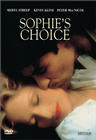 A few years after the Second World War, a young writer moves from Virginia to New York. Rents are too high in Manhattan. (Doesn’t this sound familiar?). So he settles in Brooklyn, renting a room from an elderly lady in a pink Victorian house that seems to attract eccentric people like a light pulp attracts flies. Among the roomers are Sophie (Meryll Streep) and Nathan (Kevin Kline), who are lovers and quickly become the aspiring writer’s best friends. Our writer fears that he will be without female companionship all his life and since it also may deliver good writing material he decides to fall in love with Sophie. If a triangle relationship is not complicated enough, Sophie and Nathan add drama to this constellation by bringing particularly large pieces of psychological baggage to the mix. Step by step we learn about Sophie’s and Nathan’s backgrounds. Their past is very sad indeed. In the hands of a less gifted storyteller, the movie would have left the viewer deeply depressed. But it does not. This miracle is partly achieved by Meryl Streep’s spectacular performance. Watching her play Sophie is to see one of the best pieces of acting that made it onto the big screen.
The Sea Inside
 I had no knowledge what the film was about. After an intense day of work, I needed to distract myself and The Sea Inside seemed to be the most promising motion picture on the new title shelf in the video store. I would have written a somewhat different review, had I not found out after seeing the film that it was based on the real-life story of Spaniard Ramon Sampedro, who fought a 30-year campaign in favor of euthanasia and his own right to die. As a real-life story, the hands of the writer and director Alejandro Amenábar were somewhat tied to stay reasonably close to historical fact. When I first evaluated the film as a fictional story that tries to argue that people should have the right to end their life, the film failed in my view because it does not convince you that Ramon’s life is not worth living for. I am a supporter of the notion that people who experience every second of the wake existence with the intensity of pain you would feel when your arm is cut off by an electric saw should be allowed to end their life with the help of others. But the viewer does not see Ramon suffer horribly. The real-life Ramon may have gone through hell, but we only see him during a time when one woman after another throwing herself at him although he cannot perform what the bible tells us men were created for. (A side note to my female friends: yes, the evidence is strong that you are the better creatures when compared to men, but to go on and say the only women were created by God is clearly not a view endorsed by the Bible!). Ramon’s life seems pretty darn good. I would have wanted to go on living in the kind of situation he was in. This is not a must-see film, but if you have some time to spare, I recommend it. It stimulates reflection, Javier Bardem gives a wonderful performance as Ramon, the movie at times is deeply moving, and it has one of the most erotic scenes in film history without anyone getting naked.
Farewell to “The Sopranos”
 Five years ago “The Sopranos” became a surprise TV hit on HBO. Who would have guessed that America would tune in every week to watch the family life of a New Jersey mafia family “cope” with the challenges of upper-middle class while keeping a crime ring running. Even for a mafia family, it is tough to get the manipulative grandma into a retiring home, the teenage son onto the football team and the daughter into Columbia University. Having the police breath down daddy’s neck is not helping either. The show was exceedingly well-conceived and written. The creators had a good ear for contemporary American culture. A couple of weeks ago, I began to watch Season 5 on DVD. But after two shows I gave up. The team of directors and writers were simply out of ideas to make the show move forward with dramatic force. Good night Anthony Jr., good night Meadow, good night Camilla, good night Tony… The first four seasons will always remain one of the highpoints in the history of TV.
Being Julia
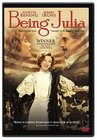 Julia (Annette Benning) is the leading theatre actress in England of 1938. She is in midlife and she is bored. Her husband (Jeremy Irons), who owns the theatre in which she performs and with whom she enjoys a perfectly sexless marriage, introduces her to a young American fan, Tom. Tom confesses his love for Julia and seduces her. Old England seems to be saved by the vitality of young America. Before long, young America turns out to be recklessly deceitful and Julia finds herself deeply disappointed. For over an hour, I was quite bored by an uninspired portrait of theatre life in London and a superficial juxtaposition of English aristocratic values and American entrepreneurial cunning. But then Julia surprises everyone, including herself. Delivering a performance of a lifetime, Annette Benning restores the honor of England at least in this movie. In reality, England went on the lose its empire and America took its place as the leading nation in the world.
The Interpreter
 For someone who loves movies as passionately as I do, embarking on long flights poses particular risks. Frequently I am offered movies that I would never leave my house for. But when a movie flickers a few inches before my nose, it is difficult to resist the temptation of glancing up and of seeing whatever the airline has selected. Even when I have heard that the film is no good it is almost impossible to so “no.” This is how I came to see large portions of the horrible recent flick Monster-in-Law with Jane Fonda & Jennifer Lopez. On the same flight I wasted another 2 hours on In Good Company, a film that had an interesting hook (in the wake of a hostile takeover a young 26-year-old who knows nothing about the business becomes the boss of a demoted 52 year manager) but fizzled away in banal dialogs. On my most recent trip, I saw against my wishes The Interpreter, which was rightfully trashed by serious movie critics. Having just watched the first season of the fabulous TV show 24, The Interpreter seemed especially weak. Both start with a similar plotline: the police wants to prevent the assassination of an important politician. Where 24 succeeds admirably in creating suspenseful drama and believable characters that keep our interest, The Interpreter has nothing to offer. The director of The Interpreter, Sydney Pollack, seems to have looked for an excuse to give you an architectural tour of UN buildings in New York and remind you that the idea behind the UN is a noble one. If you want to experience a fantastic cinematographic event, watch 24.
Cinderella Man
 I have confessed more than once that I don’t like boxing. This is the first movie in which boxing is not pointless trashing of human beings. The true-life story of Cinderella Man captures America during the great depression era and represents Hollywood at its best. The cinematography is superb: you feel like being in the ring yourself, fighting for your own survival. Paul Giamatti is in the running for an Oscar as a best supporting actor. To prepare you for why the boxer Jim Braddock was called “Cinderella Man”, I attach the text of the fairy tale Cinderella recorded from a German oral tradition by the brothers Grimm who also put out the first German-language dictionary.
Cinderella
by the Grimm Brothers
The wife of a rich man fell sick, and as she felt that her end was drawing near, she called her only daughter to her bedside and said, “Dear child, be good and pious, and then the good God will always protect you, and I will look down on you from heaven and be near you.”
Thereupon she closed her eyes and departed. Every day the maiden went out to her mother’s grave, and wept, and she remained pious and good. When winter came the snow spread a white sheet over the grave, and by the time the spring sun had drawn it off again, the man had taken another wife.
The woman had brought with her into the house two daughters, who were beautiful and fair of face, but vile and black of heart. Now began a bad time for the poor step-child. “Is the stupid goose to sit in the parlor with us,” they said. “He who wants to eat bread must earn it. Out with the kitchen-wench.” They took her pretty clothes away from her, put an old grey bedgown on her, and gave her wooden shoes.
“Just look at the proud princess, how decked out she is,” they cried, and laughed, and led her into the kitchen. There she had to do hard work from morning till night, get up before daybreak, carry water, light fires, cook and wash. Besides this, the sisters did her every imaginable injury - they mocked her and emptied her peas and lentils into the ashes, so that she was forced to sit and pick them out again. In the evening when she had worked till she was weary she had no bed to go to, but had to sleep by the hearth in the cinders. And as on that account she always looked dusty and dirty, they called her Cinderella.
It happened that the father was once going to the fair, and he asked his two step-daughters what he should bring back for them.
“Beautiful dresses,” said one, “Pearls and jewels,” said the second.
“And you, Cinderella,” said he, “what will you have?”
“Father break off for me the first branch which knocks against your hat on your way home.”
So he bought beautiful dresses, pearls and jewels for his two step-daughters, and on his way home, as he was riding through a green thicket, a hazel twig brushed against him and knocked off his hat. Then he broke off the branch and took it with him. When he reached home he gave his step-daughters the things which they had wished for, and to Cinderella he gave the branch from the hazel-bush. Cinderella thanked him, went to her mother’s grave and planted the branch on it, and wept so much that the tears fell down on it and watered it. And it grew and became a handsome tree. Thrice a day Cinderella went and sat beneath it, and wept and prayed, and a little white bird always came on the tree, and if Cinderella expressed a wish, the bird threw down to her what she had wished for.
It happened, however, that the king gave orders for a festival which was to last three days, and to which all the beautiful young girls in the country were invited, in order that his son might choose himself a bride. When the two step-sisters heard that they too were to appear among the number, they were delighted, called Cinderella and said, “comb our hair for us, brush our shoes and fasten our buckles, for we are going to the wedding at the king’s palace.”
Cinderella obeyed, but wept, because she too would have liked to go with them to the dance, and begged her step-mother to allow her to do so.
“You go, Cinderella,” said she, “covered in dust and dirt as you are, and would go to the festival. You have no clothes and shoes, and yet would dance.” As, however, Cinderella went on asking, the step-mother said at last, “I have emptied a dish of lentils into the ashes for you, if you have picked them out again in two hours, you shall go with us.”
The maiden went through the back-door into the garden, and called, “You tame pigeons, you turtle-doves, and all you birds beneath the sky, come and help me to pick
the good into the pot,
the bad into the crop.”
Then two white pigeons came in by the kitchen window, and afterwards the turtle-doves, and at last all the birds beneath the sky, came whirring and crowding in, and alighted amongst the ashes. And the pigeons nodded with their heads and began pick, pick, pick, pick, and the rest began also pick, pick, pick, pick, and gathered all the good grains into the dish. Hardly had one hour passed before they had finished, and all flew out again.
Then the girl took the dish to her step-mother, and was glad, and believed that now she would be allowed to go with them to the festival.
But the step-mother said, “No, Cinderella, you have no clothes and you can not dance. You would only be laughed at.” And as Cinderella wept at this, the step-mother said, if you can pick two dishes of lentils out of the ashes for me in one hour, you shall go with us. And she thought to herself, that she most certainly cannot do again.
When the step-mother had emptied the two dishes of lentils amongst the ashes, the maiden went through the back-door into the garden and cried, “You tame pigeons, you turtle-doves, and all you birds beneath the sky, come and help me to pick
the good into the pot,
the bad into the crop.”
Then two white pigeons came in by the kitchen-window, and afterwards the turtle-doves, and at length all the birds beneath the sky, came whirring and crowding in, and alighted amongst the ashes. And the doves nodded with their heads and began pick, pick, pick, pick, and the others began also pick, pick, pick, pick, and gathered all the good seeds into the dishes, and before half an hour was over they had already finished, and all flew out again. Then the maiden was delighted, and believed that she might now go with them to the wedding.
But the step-mother said, “All this will not help. You cannot go with us, for you have no clothes and can not dance. We should be ashamed of you.” On this she turned her back on Cinderella, and hurried away with her two proud daughters.
As no one was now at home, Cinderella went to her mother’s grave beneath the hazel-tree, and cried,
“Shiver and quiver, little tree,
Silver and gold throw down over me.”
Then the bird threw a gold and silver dress down to her, and slippers embroidered with silk and silver. She put on the dress with all speed, and went to the wedding. Her step-sisters and the step-mother however did not know her, and thought she must be a foreign princess, for she looked so beautiful in the golden dress. They never once thought of Cinderella, and believed that she was sitting at home in the dirt, picking lentils out of the ashes. The prince approached her, took her by the hand and danced with her. He would dance with no other maiden, and never let loose of her hand, and if any one else came to invite her, he said, “This is my partner.”
She danced till it was evening, and then she wanted to go home. But the king’s son said, “I will go with you and bear you company,” for he wished to see to whom the beautiful maiden belonged. She escaped from him, however, and sprang into the pigeon-house. The king’s son waited until her father came, and then he told him that the unknown maiden had leapt into the pigeon-house. The old man thought, “Can it be Cinderella.” And they had to bring him an axe and a pickaxe that he might hew the pigeon-house to pieces, but no one was inside it. And when they got home Cinderella lay in her dirty clothes among the ashes, and a dim little oil-lamp was burning on the mantle-piece, for Cinderella had jumped quickly down from the back of the pigeon-house and had run to the little hazel-tree, and there she had taken off her beautiful clothes and laid them on the grave, and the bird had taken them away again, and then she had seated herself in the kitchen amongst the ashes in her grey gown.
Next day when the festival began afresh, and her parents and the step-sisters had gone once more, Cinderella went to the hazel-tree and said,
“Shiver and quiver, my little tree,
Silver and gold throw down over me.”
Then the bird threw down a much more beautiful dress than on the preceding day. And when Cinderella appeared at the wedding in this dress, every one was astonished at her beauty. The king’s son had waited until she came, and instantly took her by the hand and danced with no one but her. When others came and invited her, he said, “This is my partner.” When evening came she wished to leave, and the king’s son followed her and wanted to see into which house she went. But she sprang away from him, and into the garden behind the house. Therein stood a beautiful tall tree on which hung the most magnificent pears. She clambered so nimbly between the branches like a squirrel that the king’s son did not know where she was gone. He waited until her father came, and said to him, “The unknown maiden has escaped from me, and I believe she has climbed up the pear-tree.” The father thought, “Can it be Cinderella.” And had an axe brought and cut the tree down, but no one was on it. And when they got into the kitchen, Cinderella lay there among the ashes, as usual, for she had jumped down on the other side of the tree, had taken the beautiful dress to the bird on the little hazel-tree, and put on her grey gown.
On the third day, when the parents and sisters had gone away, Cinderella went once more to her mother’s grave and said to the little tree,
“Shiver and quiver, my little tree,
silver and gold throw down over me.”
And now the bird threw down to her a dress which was more splendid and magnificent than any she had yet had, and the slippers were golden. And when she went to the festival in the dress, no one knew how to speak for astonishment. The king’s son danced with her only, and if any one invited her to dance, he said this is my partner.
When evening came, Cinderella wished to leave, and the king’s son was anxious to go with her, but she escaped from him so quickly that he could not follow her. The king’s son, however, had employed a ruse, and had caused the whole staircase to be smeared with pitch, and there, when she ran down, had the maiden’s left slipper remained stuck. The king’s son picked it up, and it was small and dainty, and all golden.
Next morning, he went with it to the father, and said to him, no one shall be my wife but she whose foot this golden slipper fits. Then were the two sisters glad, for they had pretty feet. The eldest went with the shoe into her room and wanted to try it on, and her mother stood by. But she could not get her big toe into it, and the shoe was too small for her. Then her mother gave her a knife and said, “Cut the toe off, when you are queen you will have no more need to go on foot.” The maiden cut the toe off, forced the foot into the shoe, swallowed the pain, and went out to the king’s son. Then he took her on his his horse as his bride and rode away with her. They were obliged, however, to pass the grave, and there, on the hazel-tree, sat the two pigeons and cried,
“Turn and peep, turn and peep,
there’s blood within the shoe,
the shoe it is too small for her,
the true bride waits for you.”
Then he looked at her foot and saw how the blood was trickling from it. He turned his horse round and took the false bride home again, and said she was not the true one, and that the other sister was to put the shoe on. Then this one went into her chamber and got her toes safely into the shoe, but her heel was too large. So her mother gave her a knife and said, “Cut a bit off your heel, when you are queen you will have no more need to go on foot.” The maiden cut a bit off her heel, forced her foot into the shoe, swallowed the pain, and went out to the king’s son. He took her on his horse as his bride, and rode away with her, but when they passed by the hazel-tree, the two pigeons sat on it and cried,
“Turn and peep, turn and peep,
there’s blood within the shoe,
the shoe it is too small for her,
the true bride waits for you.”
He looked down at her foot and saw how the blood was running out of her shoe, and how it had stained her white stocking quite red. Then he turned his horse and took the false bride home again. “This also is not the right one,” said he, “have you no other daughter.” “No,” said the man, “there is still a little stunted kitchen-wench which my late wife left behind her, but she cannot possibly be the bride.” The king’s son said he was to send her up to him, but the mother answered, oh, no, she is much too dirty, she cannot show herself. But he absolutely insisted on it, and Cinderella had to be called.
She first washed her hands and face clean, and then went and bowed down before the king’s son, who gave her the golden shoe. Then she seated herself on a stool, drew her foot out of the heavy wooden shoe, and put it into the slipper, which fitted like a glove. And when she rose up and the king’s son looked at her face he recognized the beautiful maiden who had danced with him and cried, “That is the true bride.” The step-mother and the two sisters were horrified and became pale with rage, he, however, took Cinderella on his horse and rode away with her. As they passed by the hazel-tree, the two white doves cried,
“Turn and peep, turn and peep,
no blood is in the shoe,
the shoe is not too small for her,
the true bride rides with you.”
And when they had cried that, the two came flying down and placed themselves on Cinderella’s shoulders, one on the right, the other on the left, and remained sitting there.
When the wedding with the king’s son was to be celebrated, the two false sisters came and wanted to get into favor with Cinderella and share her good fortune. When the betrothed couple went to church, the elder was at the right side and the younger at the left, and the pigeons pecked out one eye from each of them. Afterwards as they came back the elder was at the left, and the younger at the right, and then the pigeons pecked out the other eye from each. And thus, for their wickedness and falsehood, they were punished with blindness all their days.
English translation by Margaret Hunt
Continue Reading

© 2026 Peter Murmann. Powered by ExpressionEngine.
