

Brokeback Mountain
 Just as in The Sound of Music the most impressive character in the Ang Lee’s cowboy movie are beautiful mountains. Whenever the camera shows pictures of the arresting Wyoming landscape, one’s soul takes in a deep breath. As a piece of drama the film falls flat: forty years ago a story of two cowboys in love would have been a shocker to everyone. Elton John got married two weeks ago to his boyfriend and this was news only because Elton John is a celebrity. As a piece of politics and a moral statement, the movie works very well. Whereas European countries one after another are allowing gay people to form mariage-like unions, several American states now are putting laws on the books to outlaw legal unions between people of the same sex. Since the identity of most American is tied up with the idea of macho cowboy, it is a brilliant symbolic move to show cowboys deeply in love with each other.
A Good Woman
 For all you fans of Oscar Wilde, here is a movie that you will enjoy. Wilde’s successful play “Lady’s Windermere’s Fan” (1892) was recently turned into a motion picture with Scarlet Johansson and Helen Hunt in the leading role. Not having read Wilde for over a decade, I ravished listening to witty dialogs about marriage and happiness. After watching the movie I browsed through the play to see how faithfully Howard Himelstein adapted the play to the big screen. The movie transplants the action from London to summertime Italy and stretches twenty-four hours, during which the play takes place, over a couple of weeks. I dare say that the film is even better than the original play. Only Scarlet Johansson, who is the latest celebrity with her own perfume line, seems a bit miscast for the Victorian persona of Lady Windermere.
Charlie and the Chocolate Factory
 Charlie is charming poor boy who lives not far from the world largest chocolate factory. Besides mom and dad, the four grandparents stay in Charlie’s small Hansel and Gretel house whose holes in the roof provide Charlie more with a sense of adventure than discomfort. Presenting an unusual picture of inter-family bliss, the four grandparents of Charlie stay in the same bed all day, always ready to support Charlie in his aspirations. A marvelous story teller, Charlie’s grandfather on the left side of the bed used to work in the chocolate factory. He shares with his grandson the dream of visiting the chocolate factory one more time. Together they try to find a way to make it happen. The imagination powering the film is stunning. This is one of the rare films that will please adults and children alike. Bring a piece of chocolate to the show!
Sophie’s Choice
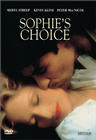 A few years after the Second World War, a young writer moves from Virginia to New York. Rents are too high in Manhattan. (Doesn’t this sound familiar?). So he settles in Brooklyn, renting a room from an elderly lady in a pink Victorian house that seems to attract eccentric people like a light pulp attracts flies. Among the roomers are Sophie (Meryll Streep) and Nathan (Kevin Kline), who are lovers and quickly become the aspiring writer’s best friends. Our writer fears that he will be without female companionship all his life and since it also may deliver good writing material he decides to fall in love with Sophie. If a triangle relationship is not complicated enough, Sophie and Nathan add drama to this constellation by bringing particularly large pieces of psychological baggage to the mix. Step by step we learn about Sophie’s and Nathan’s backgrounds. Their past is very sad indeed. In the hands of a less gifted storyteller, the movie would have left the viewer deeply depressed. But it does not. This miracle is partly achieved by Meryl Streep’s spectacular performance. Watching her play Sophie is to see one of the best pieces of acting that made it onto the big screen.
The Sea Inside
 I had no knowledge what the film was about. After an intense day of work, I needed to distract myself and The Sea Inside seemed to be the most promising motion picture on the new title shelf in the video store. I would have written a somewhat different review, had I not found out after seeing the film that it was based on the real-life story of Spaniard Ramon Sampedro, who fought a 30-year campaign in favor of euthanasia and his own right to die. As a real-life story, the hands of the writer and director Alejandro Amenábar were somewhat tied to stay reasonably close to historical fact. When I first evaluated the film as a fictional story that tries to argue that people should have the right to end their life, the film failed in my view because it does not convince you that Ramon’s life is not worth living for. I am a supporter of the notion that people who experience every second of the wake existence with the intensity of pain you would feel when your arm is cut off by an electric saw should be allowed to end their life with the help of others. But the viewer does not see Ramon suffer horribly. The real-life Ramon may have gone through hell, but we only see him during a time when one woman after another throwing herself at him although he cannot perform what the bible tells us men were created for. (A side note to my female friends: yes, the evidence is strong that you are the better creatures when compared to men, but to go on and say the only women were created by God is clearly not a view endorsed by the Bible!). Ramon’s life seems pretty darn good. I would have wanted to go on living in the kind of situation he was in. This is not a must-see film, but if you have some time to spare, I recommend it. It stimulates reflection, Javier Bardem gives a wonderful performance as Ramon, the movie at times is deeply moving, and it has one of the most erotic scenes in film history without anyone getting naked.
Farewell to “The Sopranos”
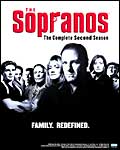 Five years ago “The Sopranos” became a surprise TV hit on HBO. Who would have guessed that America would tune in every week to watch the family life of a New Jersey mafia family “cope” with the challenges of upper-middle class while keeping a crime ring running. Even for a mafia family, it is tough to get the manipulative grandma into a retiring home, the teenage son onto the football team and the daughter into Columbia University. Having the police breath down daddy’s neck is not helping either. The show was exceedingly well-conceived and written. The creators had a good ear for contemporary American culture. A couple of weeks ago, I began to watch Season 5 on DVD. But after two shows I gave up. The team of directors and writers were simply out of ideas to make the show move forward with dramatic force. Good night Anthony Jr., good night Meadow, good night Camilla, good night Tony… The first four seasons will always remain one of the highpoints in the history of TV.
The Island

The Island takes you on a surprising trip. You think that you will end up on a tropical paradise, but the films takes you to lands that you never expected. And it will make you think about your own life in ways that you may have never dared before. It’s a journey worth taking.
Continue Reading
Being Julia
 Julia (Annette Benning) is the leading theatre actress in England of 1938. She is in midlife and she is bored. Her husband (Jeremy Irons), who owns the theatre in which she performs and with whom she enjoys a perfectly sexless marriage, introduces her to a young American fan, Tom. Tom confesses his love for Julia and seduces her. Old England seems to be saved by the vitality of young America. Before long, young America turns out to be recklessly deceitful and Julia finds herself deeply disappointed. For over an hour, I was quite bored by an uninspired portrait of theatre life in London and a superficial juxtaposition of English aristocratic values and American entrepreneurial cunning. But then Julia surprises everyone, including herself. Delivering a performance of a lifetime, Annette Benning restores the honor of England at least in this movie. In reality, England went on the lose its empire and America took its place as the leading nation in the world.
The Upside of Anger
 Mike Binder, who wrote, directed, and played a small part in The Upside of Anger, successfully pushes the boundaries of the “romantic comedy” genre. The humor takes place on a thick background of anger, despair and sadness. Terry Wolfmeyer (Joan Allen), an elegant suburban woman with four daughters ranging between the ages of 13 to 22 suffers an all too common fate of middle-age wives: the husband just takes off from one day to the next. Terry is devasted by the thought that the father of her four children would run off with his young Swedish secretary. She becomes an alocoholic, barely managing to keep her household going. She is full of anger, letting it out on her four children and the former baseball star, now low-life, neighbor Denny (Kevin Costner). What makes this film watchable is that it frequently creates funny dialogs between the angry Terry, her headstrong children, and the Danny, who quickly has second thoughts about getting her into the sack.
The Interpreter
 For someone who loves movies as passionately as I do, embarking on long flights poses particular risks. Frequently I am offered movies that I would never leave my house for. But when a movie flickers a few inches before my nose, it is difficult to resist the temptation of glancing up and of seeing whatever the airline has selected. Even when I have heard that the film is no good it is almost impossible to so “no.” This is how I came to see large portions of the horrible recent flick Monster-in-Law with Jane Fonda & Jennifer Lopez. On the same flight I wasted another 2 hours on In Good Company, a film that had an interesting hook (in the wake of a hostile takeover a young 26-year-old who knows nothing about the business becomes the boss of a demoted 52 year manager) but fizzled away in banal dialogs. On my most recent trip, I saw against my wishes The Interpreter, which was rightfully trashed by serious movie critics. Having just watched the first season of the fabulous TV show 24, The Interpreter seemed especially weak. Both start with a similar plotline: the police wants to prevent the assassination of an important politician. Where 24 succeeds admirably in creating suspenseful drama and believable characters that keep our interest, The Interpreter has nothing to offer. The director of The Interpreter, Sydney Pollack, seems to have looked for an excuse to give you an architectural tour of UN buildings in New York and remind you that the idea behind the UN is a noble one. If you want to experience a fantastic cinematographic event, watch 24.

© 2026 Peter Murmann. Powered by ExpressionEngine.
