

Guide to The Best 1,000 Movies Ever Made
 Putting in a plug for the competition, here you can find a directory of the 1000 best movies according to the film critics of the New York Times. NY Times Guide
Why It Often Rains in the Movies
A few days ago, I read this wonderful short piece by Lawrence Raab in a book entitled “The Paris Review Book for Planes, Trains, Elevators, and Waiting Rooms” (p. 260).
Because so much consequential thinking
happens in the rain. A steady mist
to recall departures, a bitter downpour
for betrayal. As if the first thing
a man wants to do when he learns his wife
is sleeping with his best friend, and has been
for years, the very first thing
is not to make a drink, and drink it,
and make another, but to walk outside
into bad wheather. It’s true
Prince Charles to Marry His Lover
As far as stories goes, this one printed in today’s New York Times is a pretty good one…
Charles Calls End to the Affair: He’ll Happily Wed His Camilla
By SARAH LYALL
LONDON, Feb. 10 - They have been friends for more than 30 years and lovers for most of that time. They have survived marriages to and divorces from other people; the icy disapproval of relatives; the resentment of the public; and, perhaps most excruciating of all, the publication of intimate details of their risqu
Continue ReadingThe Golden Dream Goes on and on in Southern California
Verylyn Klinkenborg published today interesting travel notes in the NY Times.
Rereading the Landscape of an Essay by Joan Didion
SAN BERNARDINO, Calif.
Forty years ago this month, a housewife named Lucille Miller - just turning 35 - came to trial in San Bernardino for the murder of her husband, a dentist who was named Gordon Miller and called Cork. The murder was a clumsy one. Cork Miller burned to death in the back seat of a 1964 Volkswagen. According to the district attorney, Lucille Miller intended to make it look as if the car had rolled over an embankment and burst into flames. She would have had time in that deserted neighborhood to get home before the accident was reported. Instead, the car got stuck in the sand in low gear, and burst into flames anyway.
Continue ReadingMillion Dollar Baby
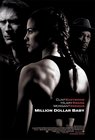 There is an iron-law of film-making that every director should recognize: When the script is poor, it is impossible to create a good film. Million Dollar Baby has noble intentions. It wants to be deep. Towards the end, it surprisingly gains gravitas and you want to forget that three quarters of the movie were slow and banal, especially for a guy like myself who thinks that deriving joy from watching peeople beat each other up (boxing) is infantile. I don’t mind a martial arts film because martial arts is all about self-defense and not pointless thrashing.
The Knight “Georg Murmann”
 Reading Don Quixote I learn great deal about the medieval literature about knights. Cervantes spoofs these stories in his famous novel. Apparently, there was also a “Murmann” knight, born in 1766. [Now I know why I am such a chivalrous kind of guy:) ] Georg Murmann entered the military in 1783 and spent all his life as a brave soldier, so we are told. For his heroism in many a battle fought first against the Turks and then the French he was made in 1811 a knight of the Maria Theresia order. He retired from the military July 20, 1820. The picture represents his coat of arms that he worked on during his retirement. So did his life make a difference? If you count up the number of streets named after a person to make this judgment, the answer is—a little. One small street bears his name.
.
Continue ReadingDon Quixote
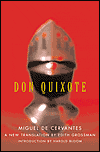
One of the most compelling moments in Guess Who’s Coming to Dinner occurs when a son points out to his father that they have fundamentally assymetrical duties toward one another. Three days ago I started to read Don Quixote. It is hard to put the book down. I just came across a wonderful passage that reminded me of the aforementioned scene in Guess Who’s Coming to Dinner. Here the concern is the assymetrical relationship between the lover and beloved. Read for yourself.
Experiencing an Epiphany
It is so much fun to watch children because for them everything is new. Teenagers already know quite a lot about the world, but they are still willing to experiment with new identities and become someone entirely different from one day to the next. When people reach middle age, this all seems to stop. People typically settle for stable identities, careers, and seek durable relationships. For good reason: To function society needs dependable adults. So it is really something extraordinary when individuals in midlife radically change their relationship to the world. I recently met an investment banker who decided to leave Wall Street and become a priest. I was curious how this happened. “It was a calling. I had to do it.” He went on to tell me that he is much happier now. Today I encountered in the New York Times Hollywood soap opera producer who also seemed to have had a epiphany. He also felt a strong calling to dramatically change his career. I am getting very curious about what happens psychologically when people experience such a calling in midlife. See for yourself.
Continue ReadingInteresting Article in the New Yorker: “The Mistress’s Daughter”

The New Yorker once in a while publishes personal histories that are compelling because they touch upon core issues our lives, are deeply thought through, and are superbly written. The one I read last night by Amy Holmes is available on the web.
Edgar Allen Poe’s “Annabel Lee”
I found a wonderful poem by Edgar Allen Poe that possesses remarkable musicality.
It was many and many a year ago,
In a kingdom by the sea,
That a maiden there lived whom you may know
By the name of Annabel Lee;
And this maiden she lived with no other thought
Than to love and be loved by me.
Continue Reading

© 2026 Peter Murmann. Powered by ExpressionEngine.
