

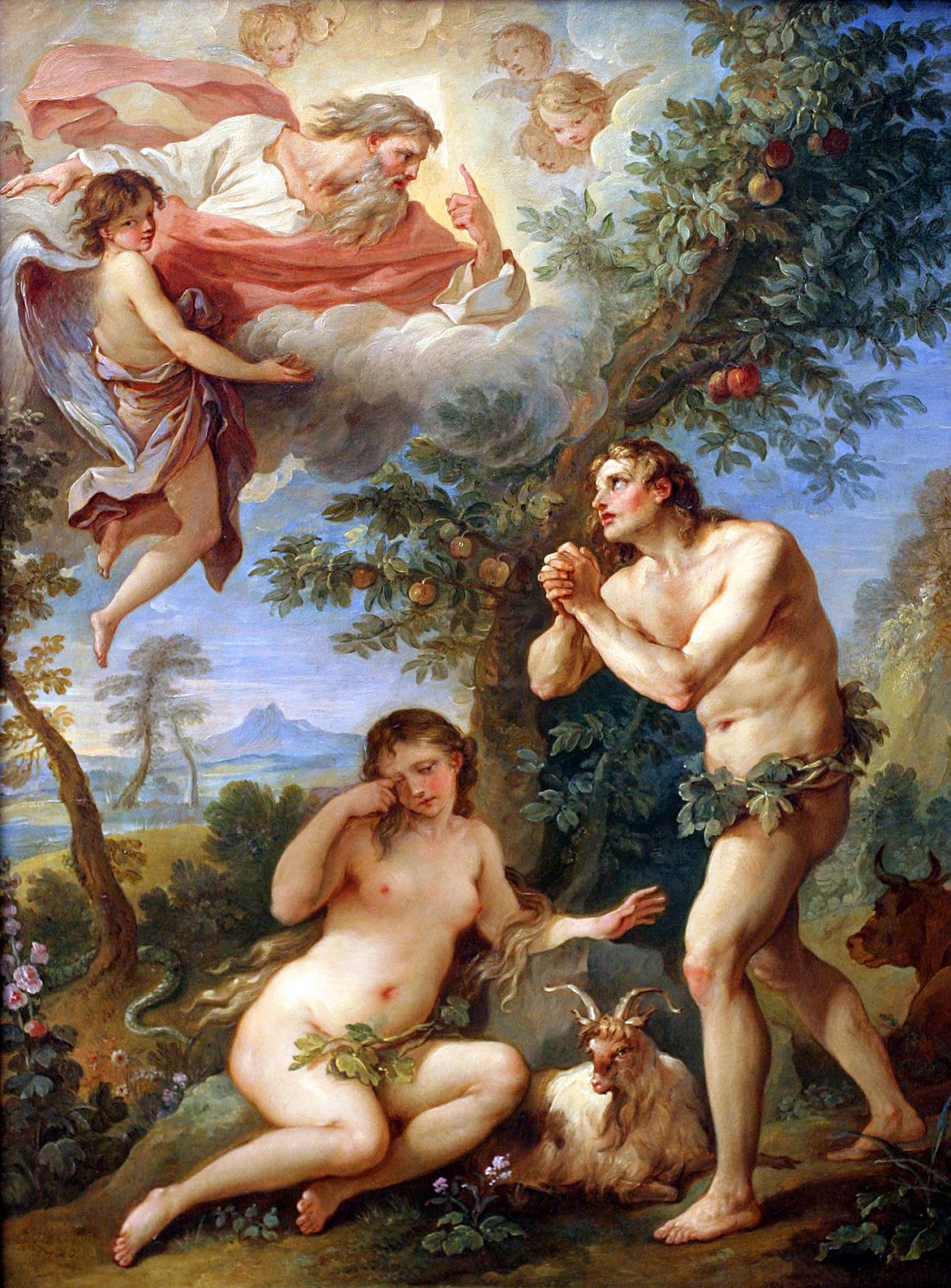
 The Economist reviews two books on the idea of paradise throughout human history. By historical standards, people in the industrialized countries are close to paradise in a material sense. The trick is to feel spiritually this way. The Germans have proven in the past few weeks that possessing a good national soccer team helps a long way to take the final step. But then the Italians, who seem to be closer to God with the Vatican in Rome, showed the Germans that full Paradise remains one step, that is one small goal away.
Heaven on earth: Positing paradise
For 3,000 years people have tried to imagine what paradise might look like. WHERE do you find paradise on a map? To the modern eye, used to the cheap and functional cartography of roads and frontiers, the very question is absurd. Maps show real things, not imaginary ones. You might as well look for happiness in a telephone directory.
As Alessandro Scafi shows in his erudite history of the Christian effort to map paradise, pre-modern mapmakers focused on spiritual navigation, not the secular kind. They tried to portray time and space in a way that is still beautiful, but can seem baffling. Their maps showed God, history, and human woes and joys, often biblical ones. The Garden of Eden was a real place, just as Adam was a real man.
Such maps depicted paradise as imaginatively and confidently as they did earthly topography. The world was like a plate; paradise was up a mountain, across a sea, perhaps guarded by angels, maybe in China, or Armenia, or Abyssinia, or Mesopotamia. Christopher Columbus, encountering the Amazon river’s freshwater, thought it must flow from paradise.
Mr Scafi’s book illustrates beautifully (though, sadly, all too often in black and white) how Eden shifted from the centre of maps to the periphery, and ultimately to the margins. The Renaissance and the Reformation boosted mankind’s intellectual and cultural self-confidence. Although belief in a long-ago Eden’s literal existence survived, most agreed with Martin Luther that it had perished in the flood. Even pious mapmakers found it hard to reconcile the clues in the Bible (a place where four rivers rose) with the realities of physical geography. Paradise became not just inaccessible, but something out of this world.
Even today, on the fringes of Christianity and in popular journalism, there are people who claim to have found the Garden of Eden. It may not be paradise now (especially if it is a dusty and desolate corner of Iraq). But it jolly well was once. Mr Scafi tells this story well from the sublime start to the ridiculous end, with spectacular flourishes of art history and confident quotes from Latin, Greek and Hebrew. But the focus is tight; other cultures’ heavenly ideas are barely mentioned.
Kevin Rushby’s book, by contrast, starts earlier, spreads wider and ends later. His enjoyable and informative canter through three millennia of intellectual and religious history highlights the many ways, ingenious, beautiful, wrongheaded or mad, in which humans have tried to define paradise, seek it or, latterly, create it.
The idea predates Christianity, coming from ancient Babylon, where a paradeiza was an enclosure used for easy hunting. That idea of abundance, or

Your Comments
0 Responses. Comments closed for this entry.