

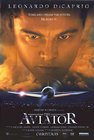
 The Aviator received the most Academy Award nominations for the year 2004, with 11 total. This is very difficult to understand because the film is a painfully weak piece of work for Martin Scorcese (director) and John Logan (writer). Both Scorcese in Gangs of New York and Logan in The Last Sumarai have shown that they can do justice to historical material on the big screen. After seeing or reading a good biography we are supposed to understand a person better. Logan’s script about Hughes fascinating life fails to explain anything. All Logan does is to copy the explanatory structure of Orson Well’s Citizen Kane and provide us with a contrived childhood explanation for Hughes adult life. Scorcese empathizes with Howard Hughes so strongly that he seems to have lost his own directorial mind in the process. Scorcese, for example, designed each year in the film to look just the way a color film from that time period would look. Furthermore, many of the sets are designed very cheaply, perhaps also to imitate movies from the 1920s and 1930s. Unfortunately, this means that you never forget that the drama is staged. Rather than lend sophistication to the film, it makes the film look amateurish. Then suddenly, out of the blue, comes a scene in which Hughes crashes with his plane in the middle of L.A. Using the best special effect technology that money can buy today, the scene has more realism than most scenes in the film. Clearly enormous amounts of money and effort went into the scene. But it is clearly over the top in its scale and its violence compared to anything that happened before. At this moment you murmur to yourself: What happened to Scorcese legendary touch? The only explanation I can offer for why the The Avatior won the Oscars for best art direction, best cinematography, and best costume design, as well as for best-supporting actress is that the average voters in the Academy of Motion Pictures are so self-absorbed that they would vote rather for a bad movie about Hollywood than a good film about another industry. The one Oscar that strikes me as well-deserved is Kate Blanchett’s for the supporting actress. Blanchett does an outstanding job playing Katherine Hepburn. If Howard Hughes were alive today, he would have made a better movie.
Scorcese, for example, designed each year in the film to look just the way a color film from that time period would look. Furthermore, many of the sets are designed very cheaply, perhaps also to imitate movies from the 1920s and 1930s. Unfortunately, this means that you never forget that the drama is staged. Rather than lend sophistication to the film, it makes the film look amateurish. Then suddenly, out of the blue, comes a scene in which Hughes crashes with his plane in the middle of L.A. Using the best special effect technology that money can buy today, the scene has more realism than most scenes in the film. Cearly enormous amounts of money and effort went into the scene. But it is clearly over the top in its scale and its violence compared to anything that happened before. At this moment you murmur to yourself: What happened to Scorcese legendary touch? The only explanation I can offer for why the The Avatior won the Oscars for best art direction, best cinematography and best costume design, as well as for best supporting actress is that the average voters in the Academy of Motion Pictures are so self-absorbed that they would vote rather for a bad movie about Hollywood than a good film about another industry. The one Oscar that strikes me as well-deserved is Kate Blanchett’s for the supporting actress. Blanchett does an outstanding job playing Katherine Hepburn. If Howard Hughes were alive today, he would have made a better movie.


Your Comments
0 Responses. Comments closed for this entry.