

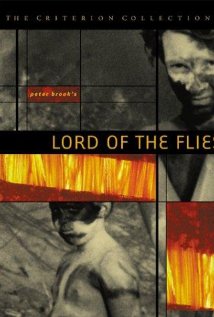
 Lord of the Flies is not entertainment in the popular sense of the word. It places high demands on the viewer. Think of it as going to a museum whose paintings are challenging for the senses; or going to the theater to see a modern piece like Waiting for Godod. A group of British children become stranded on a desert island without any adults there to supervise or guide them. I am not sure if there is a recorded case in history that would gives us any clues how a group of isolated children would actually organize their society. In the book by the same name, William Golding, imagines what kind of society the children would build for themselves. In his vision, the forces of savagery will appeal so strongly to the children’s mind that they will be hard to resist. Adult societies, of course, often struggle with the same forces. The 2nd part of the film explores this battle between the forces of savagery and civilization. If you want to know how it ends, find an evening when you are willing to sit through Peter Brooke’s film.
It was shot in 1963 on an Island of Puerto Rico with a very small budget but superb ingenuity. More on the making and trivia of the film can be found here.

Your Comments
0 Responses. Comments closed for this entry.