

Pirate Radio
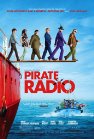 This film is a like a glass of wine that you first don’t like because the taste is so foreign (British dry humor). But after you continue to drink you warm up to the taste. And towards the end it becomes a quite magnificent comedy. Rock n’ Roll in the eyes of the autorities had the status of gangster rap. If you are into the history of rock n’ roll, even if it is fictional, Pirate Radio film has some funny moments.
500 Days of Summer
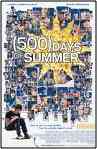 Think back to a past relationship. If you have kept a diary, read the entry for every day for as long as the relationship lasted. At the end of each day, decide whether you felt good or bad because of the person you were with. This will allow you to do a brutally honest accounting of how much happiness or suffering a relationship has brought you. Now imagine that you assign each day in the relationship a number from 1 to the last day. Let’s say it lasted 500 days. Now randomly pick out days, and reread your diary. This is exactly what 500 Days of Summer does, except in the medium of film. It is brilliant because it captures so well the ups and downs of every past relationship. After all, if it had not downs, it would not be past relationship! Don’t miss this wonderful film about the 500 day relationship between Tom (boy) and Summer (girl). It breaks new ground in how to tell a story.
Recount
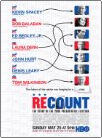 The film takes a look behind the scenes of how Gore and Bush fought out their electoral battle for five weeks after the election. Even for someone who read the newspaper every day during this period, the writer and director manage put on a gripping drama. Clearly, the movie is written from the Democratic (loosing) perspective. But with the exception of how James Baker and Warren Christopher are portrayed (the come across differently when they are on TV), the film is splendid.
Cloud 9 (Wolke 9)
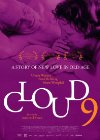 The idea of making a film about sexual desires of seniors is brilliant. Such a film was overdue. But Andreas Dresen, the 46-year-old director of Cloud 9 constructed a film about his own desires rather than exploring how seniors cope with society’s predilection to see them as sexless creatures. Dresen’s drama is not about the psychological challenges of growing old: losing your partner, falling in love again, wanting physical intimacy with someone who perhaps no longer cares for it. Dresen wants to demonstrate how we can be spooked by breaking many taboos of contemporary sensibilities. Hollywood staffs sex scenes with young women; he opens the film with a long sex scene with a woman in her late sixties and a seventy-six year old man. Even more shockingly, he gives the lead female character Inge (very well-played by Ursula Werner) the psychology of a sixteen-year-old girl who is naive, emotional, reckless, and irrational.
Gran Torino
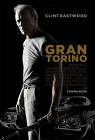 Clint Eastwood is now 78 years old. He has directed 29 movies. Some of them are very good (e.g. Letters from Iwo Jima) some of the very bad (e.g. Bridges of Madison County). He works quickly. Yet in contrast to Woody Allen who also makes one film a year, Eastwood is not repeating himself. The reason for this is simple: unlike Allen he does not write his own scripts. When Eastwood secures a good script as in the case of Gran Torino he makes great films. Gran Torino is takes place in a decaying working class neighborhood in Michigan. Whites are moving out and relatively poor immigrants move in. Putting it mildly, Walt Kowalski (played by Clint Eastwood) is not happy about this development. But after his wife dies, his anti-foreigner sentiments are challenged by the charms of the two teenage kids of the Vietnamese family that has moved in next door to him. Now you are treated to a wonderful story. I don’t want to give it away. Go see the film.
Rebel Without A Cause
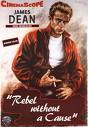 Drama about family relations. Deep insight into the human psyche. Great film. Great emotions. Great acting by James Dean. Tribute to troubled children. Love. Nathalie Wood.
Milk
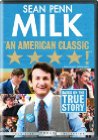 Sean Penn is perhaps my favorite living male actor. I see films merely because he is in them. Milk, the interesting real life story of the first openly gay public official in the United States proved that even the most talented actor cannot portray every character. Despite all of his amazing talents, the task of playing a gay man lies beyond Penn’s skills. This is crystal clear at the end of film when we see a snipped of the real Harvey Milk for a mere 30 seconds: Here it becomes painfully apparent that Penn comes no where close to capturing the real Harvey Milk. Penn’s failure is a stark reminder that we all may misjudge the range of our abilities. While the film does a good job in telling the basic facts about the life of Milk, it does not illuminate at all the motive that led, Dan White, a fellow member of the city council kill Milk and the Major Moscone. The ending credits refer to a documentary called the “Life and Times of Harvey Milk.”
The Baader Meinhoff Complex
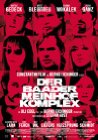 In 1997, Heinrich Breloer made a spectacular docudrama (a documentary interspersed with acted drama) about the abduction of Hans Martin Schleyer, the head of the West German employer’s union, by the Red Army Fraction, a home-grown terrorist group, formed by Andreas Baader and Ulrike Meinhoff. The Baader Meinhoff Complex goes all the way to the beginning of the group in the late 1960s and tells the story of the group largely from the imagined perspective of the terrorists. Breloer’s Todesspiel (Death Game) was compelling because he helped you understand why the terrorist acted the way they did and why the state reacted the way it did. Breloer interviewed the families of the terrorists and victims, as well as the politicians who tried to defend the state against the terrorist group that tried to bring the state to its knees and overthrow capitalist institutions in the name preventing another social injustice on the scale of Nazi Germany.
Angels and Demons
 The opening scene at the CERN physics laboratory where an experiment to create anti-matter (The God particle) takes place is visually stunning. Rome and its Catholic rituals provide a beautiful backdrop for the film. The next two hours, however, are a wild car chase through Rome that I found pretty annoying after a while. The last 25 minutes bring an unexpected turn of events that left me moderately satisfied with the film.
Continue Reading
The Reader
 The slim book on which the film is based is a wonderful read. Knowing the book makes the film much less exciting. The first hour feels very slow, particularly because book felt brisk. In the second hour the drama receives a jumpstart and you forget that you are sitting on perhaps a not so comfortable seat in the movie house. I read the book in one evening and savored the experience. After two hours watching The Reader I felt drained. A story nourished by the background of German society’s difficulty to come to terms with what Germans did between 1933 to 1945 was turned in the film into a story about how individual lives are messed up by experiences during childhood and youth. That story we have heard a million of times. Commercially the film benefitted from being made by Hollywood.

© 2026 Peter Murmann. Powered by ExpressionEngine.
