

1978: Letter from Iran
 Letter From Iran published in December 1978, right before the fall of the Shah. In the article, just posted on The New Yorker’s Web site, Joseph Kraft writes about an interview with the Shah:
He looked pale, spoke in subdued tones, and seemed dwarfed by the vast expanse of the room, with its huge, ornate chandeliers and heavy Empire furniture. He wore a double-breasted suit whose blackness suggested mourning. He started with an apology. He was sorry to have kept me waiting. The American and British Ambassadors had been in to see him. “They tried to cheer me up,” he said. “As if there were anything to be cheerful about.”
I expressed surprise at—and, indeed, felt some suspicion about—this show of gloom. There had been demonstrations in many parts of the country, and strikes, but Teheran, apart from the university, seemed calm, and the Army was in thorough control. Moreover, the opposition was headed by the Moslem clergy, and they were clearly divided. Surely, I said, the factions could be played off against each other.
“Possibly,” the Shah said, shrugging his shoulders in an elaborate show of disbelief. [...]
If worst came to worst, I went on, there was always the Army. The military was strong, and its leaders were loyal. The Shah said that force had its limitations. “You can’t crack down on one block and make the people on the next block behave,” he said.
Continue Reading“The most surreal day of my life”
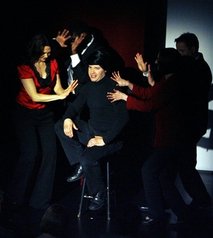 The case of Rod Blagojevich reveals that I have limited understanding of the human psyche. This guy is unbef*kinglievable! Read this story by the Associated Press that just came over the wire.
Blago guest stars in ‘Rod Blagojevich Superstar’. By RUPA SHENOY. CHICAGO - Standing on a chair with his arms raised as if he were being crucified, ousted Illinois Gov. Rod Blagojevich opened a comedy show Saturday evening lampooning the rise and fall of his own political career.
Blagojevich, who has pleaded not guilty to wide-ranging federal corruption charges, made what one cast member described as a “surreal” guest appearance on The Second City’s “Rod Blagojevich Superstar.”
The show, a takeoff of the rock opera “Jesus Christ Superstar,” was supposed to end June 14. But production officials extended the show—which portrays Blagojevich as greedy, tactless and hair-obsessed—to Aug. 9 because performances kept selling out.
Lawrence of Arabia
 Watching one of the great films in the history of the art form always fills me both with excitement and trepidation, particularly when the film was made a long time ago. Some films are timeless; others translate very poorly from the past into the present. Gone with the Wind bored the teenage me beyond belief because I felt that it was always clear that the actors were acting rather than truly experience the emotions of their characters. I thought the love story that allegedly existed between Scarlett O’Hara and Rhed Butler was simple fake, destroying the entire film for me. Many years ago I saw segments of Lawrence of Arabia but only now have I been able watch this three-and-a-half hour movie marathon in its entirety. One feels that the film was shot a few decades ago but this does not take away from its power. The Middle East is still in a political quagmire.
Obama nominates a ”‘Kid From the Bronx’ With Hopes and Doubts”
 Just like Obama’s own biography, the life of Sonia Sotomayor is an inspirational story. It will be interesting to see how the Republicans will treat her in the nomination hearing.
NEIL A. LEWIS (NY) reports: Sonia Sotomayor, who would be the Supreme Court’s first Hispanic justice, brings to the confirmation experience the kind of rich personal story that has always been deeply gratifying to Americans, the journey from humble beginnings to a respected position of great influence.As she was presented by President Obama at the White House on Tuesday morning, she referred to herself as “a kid from the Bronx.” But it was Mr. Obama who provided many details of her history as a child of a city housing project who lost her father at an early age and saw her mother work two jobs to put her and her brother through professional schools.
Continue ReadingDavid Brooks dissects the Decline on the Republican Party
 The only columnist who I follow every week is David Brooks. Maybe you should too.
The Long Voyage Home By DAVID BROOKS (NY Times)
Republicans generally like Westerns. They generally admire John Wayne-style heroes who are rugged, individualistic and brave. They like leaders—from Goldwater to Reagan to Bush to Palin—who play up their Western heritage. Republicans like the way Westerns seem to celebrate their core themes—freedom, individualism, opportunity and moral clarity. But the greatest of all Western directors, John Ford, actually used Westerns to tell a different story. Ford’s movies didn’t really celebrate the rugged individual. They celebrated civic order. For example, in Ford’s 1946 movie, “My Darling Clementine,” Henry Fonda plays Wyatt Earp, the marshal who tamed Tombstone.
Hellhole: Is solitary confinement torture?
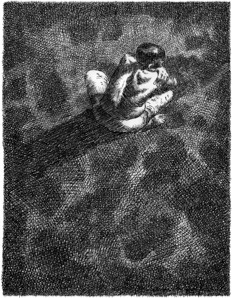 I knew that humans beings are social creatures and that we need others to reach our highest potential. But I had no idea that the brain completely disintegrates after longer periods of solitary confinement that is now practiced in many U.S. prisons. Read this fascinating story by Atul Gawande in the New Yorker. He happened upon the findings in the mid-fifties, when he decided to save money for his primate-research laboratory by breeding his own lab monkeys instead of importing them from India. Because he didn’t know how to raise infant monkeys, he cared for them the way hospitals of the era cared for human infants—in nurseries, with plenty of food, warm blankets, some toys, and in isolation from other infants to prevent the spread of infection. The monkeys grew up sturdy, disease-free, and larger than those from the wild. Yet they were also profoundly disturbed, given to staring blankly and rocking in place for long periods, circling their cages repetitively, and mutilating themselves.
Blood on the Water: Oxford Versus Cambridge.
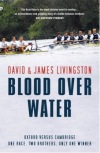 This review in the Economist wetted my appetite. I will read this book during my summer holiday. The Economist: SIBLING rivalry has many famous examples. Cain and Abel, Linus and Lucy, Liam and Noel. Less well-known, but no less competitive, are David and James Livingston, two brothers who, in April 2003, raced on opposite sides in the Oxford and Cambridge University Boat Race, one of the toughest sporting challenges in the world. “Blood Over Water”, published to coincide with the 155th boat race on March 29th, tells in alternating narratives the story of how the brothers’ quest for victory turned them into enemies. Providing context is the broader tale of the historic rowing competition between two prestigious universities.
How to Help Children Survive Separation and Divorce
 The Economist reports: JULIE LYNN EVANS, a well-known British psychotherapist, deals with troubled children with remarkable devotion and insight. As the recession puts added strain on many marriages, her account of the mental stresses and strains that parental break-up inflicts on children could not be more timely.Many of the children Ms Evans sees do not want to talk at all, regarding grown-ups as untrustworthy or irrelevant. She starts by getting them to depict their lives in spray-painted graffiti on giant sheets of paper, or by making models from sand or clay.

© 2026 Peter Murmann. Powered by ExpressionEngine.
